
The Siege of Bastogne, day by day (December 1944)
For seven days in December 1944, a surrounded American garrison held a crossroads town in the snow. This is the short, accurate version of what happened, and where you can see it today.
Updated September 27, 2026 · By the info-lux newsroom, Bastogne
The Germans attacked in the Ardennes on December 16, 1944. The 101st Airborne reached Bastogne on December 18–19 and was surrounded by December 20–21. On December 22, Brig. Gen. Anthony McAuliffe answered a surrender demand with "NUTS!". Clear skies allowed supply drops from December 23. The 4th Armored Division of Patton's Third Army broke through on December 26, 1944. Fighting around Bastogne went on until January 1945.
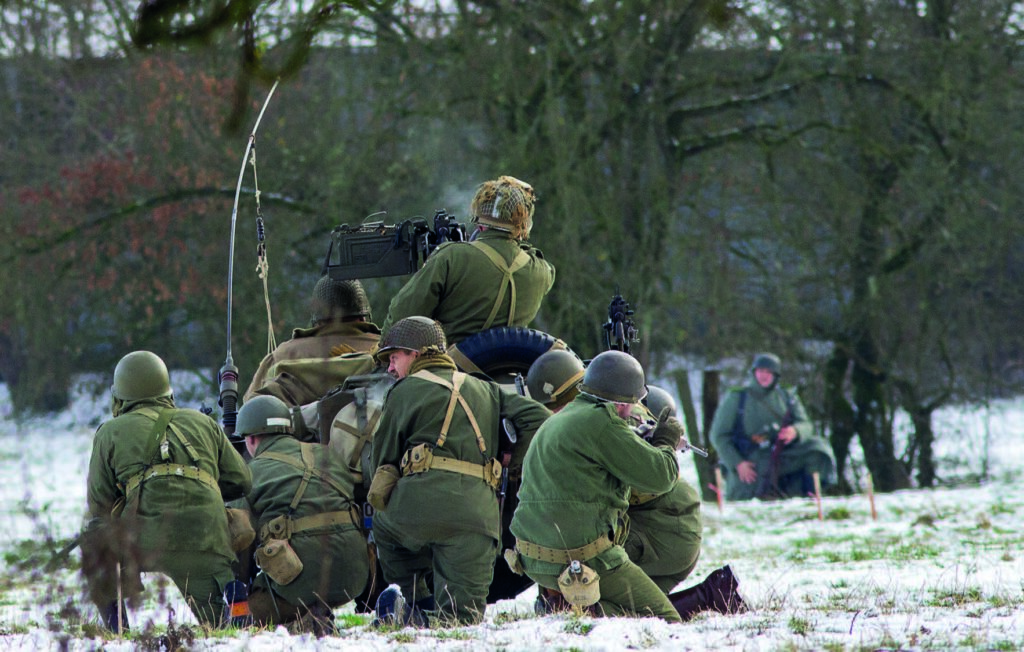
Why Bastogne?
Bastogne was a small market town, but seven main roads met here. The German plan was to cross the Meuse River and reach Antwerp, and it needed those roads to move tanks and supplies west. Whoever held Bastogne controlled the southern half of the battlefield.
Timeline
- December 16, 1944: Germany launches its Ardennes offensive against thinly held American lines.
- December 18–19: the 101st Airborne Division arrives by truck from its rest camp at Mourmelon, France. Its commander, Maj. Gen. Maxwell Taylor, is in the United States, so the division artillery commander, Brig. Gen. Anthony McAuliffe, takes command. Combat Command B of the 10th Armored Division is already fighting east and north of town, at Longvilly and Noville.
- December 20–21: the last road south is cut. Bastogne is surrounded.
- December 22: German officers under a white flag deliver a surrender demand. McAuliffe replies: "To the German Commander: NUTS! The American Commander." Col. Joseph Harper explains the meaning to the Germans: "Go to hell."
- December 23: the skies clear. C-47s drop ammunition, food and medical supplies to the garrison, and fighter-bombers attack German positions.
- December 24: German bombers hit the town on Christmas Eve. An aid station is destroyed and wounded soldiers and a Belgian nurse, Renée Lemaire, are killed.
- December 25: a German attack from the northwest, near Champs and Hemroulle, is stopped.
- December 26, about 4:50 p.m.: tanks of the 37th Tank Battalion, 4th Armored Division, led by Lt. Charles Boggess, reach the perimeter near Assenois. The siege is broken.
- January 1945: heavy fighting continues around the town, including the attacks on Foy and Noville. The Battle of the Bulge officially ends on January 25, 1945.
The human cost
The Battle of the Bulge was the largest and bloodiest single battle fought by the U.S. Army in World War II. About 19,000 American soldiers were killed. Belgian civilians also paid a heavy price. Many villages around Bastogne were destroyed, and people sheltered for days in cellars.
Where to see it today
- The whole story, told through four witnesses: Bastogne War Museum.
- McAuliffe's headquarters and the "NUTS!" cellar: Bastogne Barracks.
- The Christmas Eve bombing, recreated in a cellar: 101st Airborne Museum.
- The front line in the woods: Bois Jacques foxholes.
- Patton's role and the Sherman "Barracuda": McAuliffe Square and the Patton memorial.
Practical information
| Dates of the siege | December 20–26, 1944 (fighting around the town until January 1945) |
|---|---|
| American defenders | 101st Airborne Division, Combat Command B of the 10th Armored Division, 705th Tank Destroyer Battalion and attached artillery |
| Acting commander | Brig. Gen. Anthony C. McAuliffe |
| "NUTS!" reply | December 22, 1944 |
| Relief | 4th Armored Division (Third Army), December 26, 1944 |
Frequently asked questions
What did "NUTS!" mean?
It was American slang for "no way" or "go to hell." On December 22, 1944, Brig. Gen. Anthony McAuliffe used it as his entire reply to a German demand that Bastogne surrender.
How long was Bastogne surrounded?
About a week: the encirclement was complete by December 20–21, 1944, and the 4th Armored Division broke through on December 26, 1944.
Who relieved Bastogne?
The 4th Armored Division of General George S. Patton's Third Army. Its tanks reached the perimeter near Assenois in the late afternoon of December 26, 1944.
Was Easy Company (Band of Brothers) at Bastogne?
Yes. Easy Company, 2nd Battalion, 506th Parachute Infantry Regiment, held positions in the Bois Jacques woods near Foy, north of Bastogne. Their foxholes can still be seen.
Sources: U.S. Army Center of Military History, Bastogne War Museum, Bastogne Barracks (War Heritage Institute), 101st Airborne Museum, info-lux history articles (Philippe Gruslin). Opening hours and prices change: check the official website before your visit. Written in English by the info-lux newsroom, independent regional news media based in the Belgian province of Luxembourg.